Most kitchen sink clogs sit within two feet of the drain: in the disposal or in the U-shaped trap under the sink. A plunger and a bucket clear them in about 20 minutes. Here is the order to try things in, why the bottle of drain cleaner should stay on the shelf, and how to tell when the clog is past your reach.
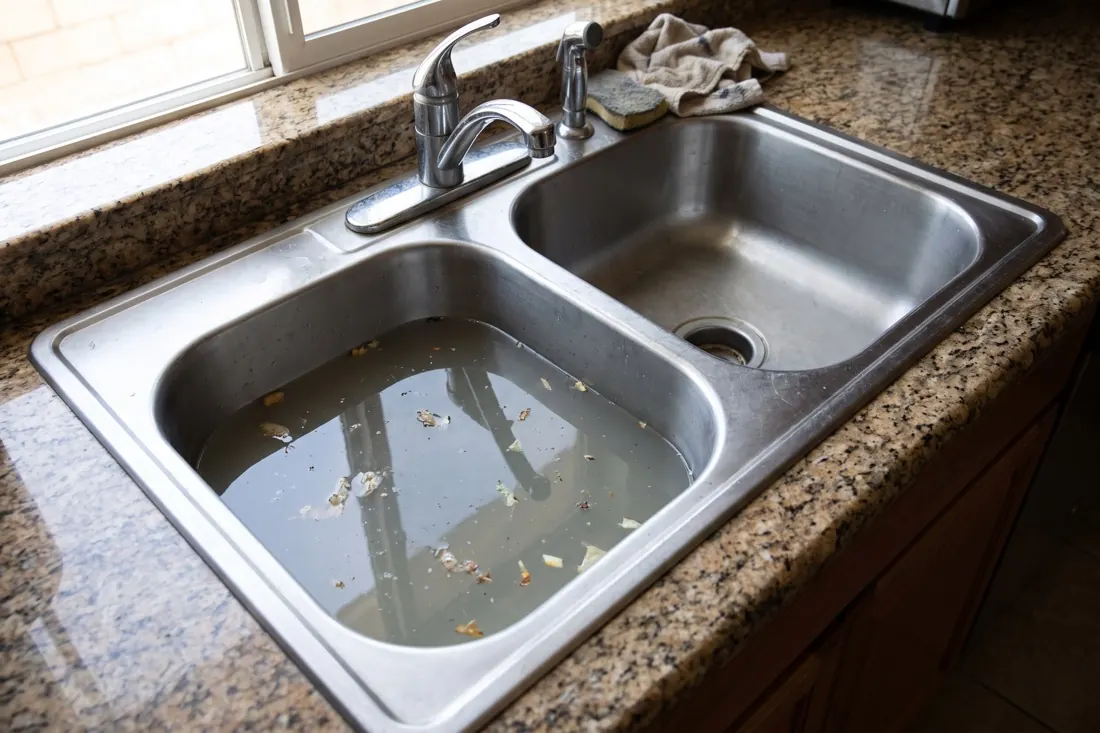
If one side has a disposal, run it with cold water for 30 seconds. A disposal packed with peels or rice is the most common kitchen clog, and running it often clears the sink on its own. If it hums instead of spinning, use our disposal guide first and come back.
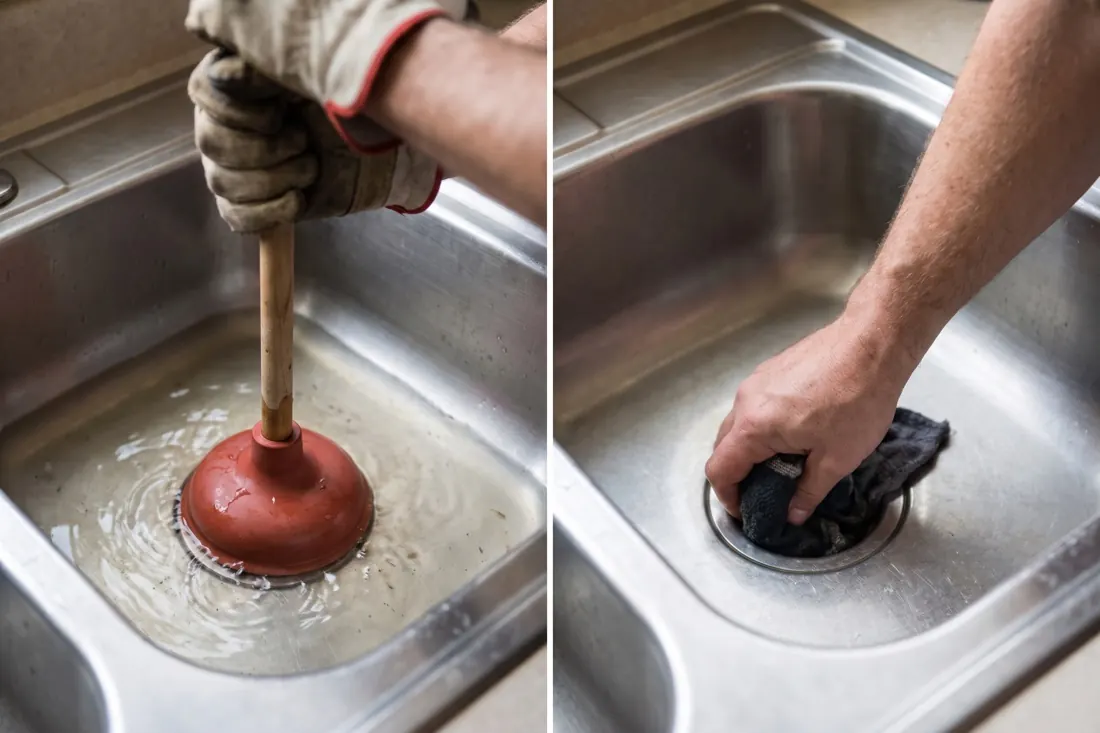
Seal the other basin's drain with a wet rag or stopper and hold it down, or the pressure escapes there. Leave an inch or two of water in the clogged side, set the cup plunger over the drain, and give it 15 to 20 firm strokes before pulling it off sharply. Try three rounds before moving on.
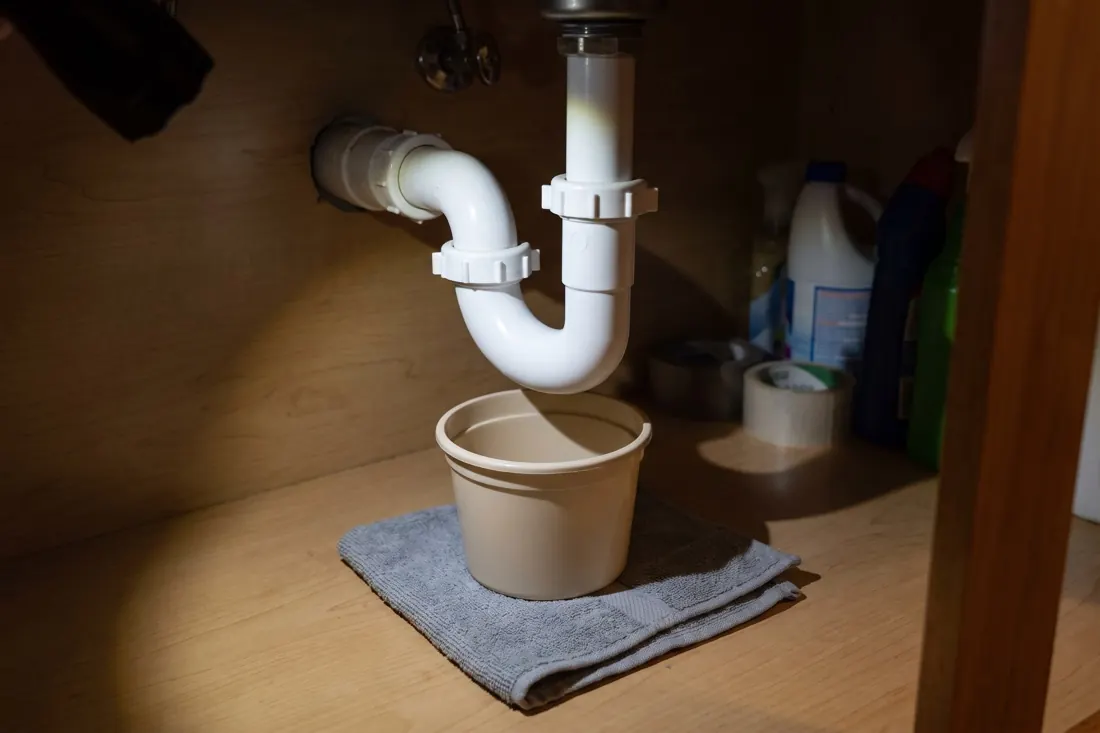
Put the bucket under the U-shaped trap, unscrew the two plastic slip nuts by hand, and drop the trap into the bucket. Clear it out, rinse it in the bucket (the sink is still clogged), and reinstall it hand-tight plus a quarter turn. Run water and watch the nuts for drips.
Once it drains, run hot tap water for a minute to carry the loosened grease down the line. From here on, wipe greasy pans into the trash and run cold water with the disposal. Grease poured down a drain hardens a few feet into the wall, which is where the next clog forms.
Most kitchen clogs are grease and food packed together, and caustic cleaners rarely get through them. What usually happens is the chemical sits in the trap on top of the clog, heats up plastic pipe, and then splashes on whoever opens the trap next. If you have already poured some in, tell us when you call so the tech knows before taking anything apart. Boiling water is out too: it can soften PVC joints and crack a porcelain sink.
Stop and call us if: the trap is clean and the sink still backs up, both basins fill at once, the dishwasher backs up into the sink, or water comes up in another drain when you run the kitchen tap. Those mean the clog is in the line inside the wall or further down, past where a plunger reaches. A sink that clogs every few months has grease building up in that line, and clearing the full line fixes what plunging only postpones.
Call and describe it. We will tell you what it likely is, what it usually involves, and how soon we can be there.
Verified Google reviews from San Diego homeowners.


"Made what I thought was a catastrophe into a quick and easy repair. I'll refer all my friends and family to use Corey at Paws Plumbing."

"Amazing professional experience. They understood the urgency and sent out a team who was extremely knowledgeable and had all the supplies with them. I found the pricing a good value for the high level of service."

"I love these guys. They always go the extra mile to make sure the repairs are done right but also quickly."
Tell us what is going on and we will give you a real answer, a real timeframe, and an upfront price.
(858) 227-7846